Ascendvent, AOSI®: AI-Native Product Development
B2C hypothesis killed by discovery. Pivoted to AI-native SaaS for practitioners. Checkin is live.
TL;DR
I started building a B2C AI confidence app. Structured discovery killed that hypothesis and I pivoted to the real customer: coaches, tutors and mentors drowning in ops. Checkin is now live, replacing email check-ins with structured workflows that surface signal to practitioners.
The Challenge
The original insight was right: the coaching market is broken. Static apps, generic habit trackers, tools that don’t adapt to where people actually are. I saw an opportunity to apply agentic AI to a deeply human problem.
The customer was wrong.
Early discovery pointed at end-users: creators and PMs dealing with confidence setbacks. But the interviews and ad experiments kept surfacing a different, more urgent problem: the practitioners themselves. Coaches, tutors and mentors are running their entire practice on email threads, calendar apps and spreadsheets. They’re doing relationship work with operations tooling, and it’s costing them clients, time and growth. The coaching tools market has no shortage of features for clients. It has almost nothing for the people running the practice.
Key Decisions
Kill the B2C hypothesis when the data killed it. The confidence recovery framing had real demand signal. Click-through on ads was meaningful, interviews validated the problem. But the unit economics didn’t hold and the customer acquisition path was expensive. The experiments ran, the results read honestly, and the call was to stop. The temptation in 0-to-1 work is to rationalize early signal into a viable business. That decision cost months of work and saved years of misalignment.
Target the practitioner, not the client. The pivot wasn’t arbitrary. It came directly from what kept surfacing in discovery. Coaches and mentors have the ops problem at scale: every client relationship multiplies the scheduling, follow-up, progress tracking and accountability overhead. The thesis: AI should handle that ops layer invisibly so the guide can focus entirely on the relationship. That reframing from “help the client feel better” to “help the practitioner scale without losing the human element” is the product.
Sequence consulting before product. Before writing a line of product code, the consulting practice launched. This wasn’t a pivot hedge. It was deliberate sequencing. Consulting with real practitioners generates the customer insight that de-risks the product roadmap, and it generates revenue while the product is built. Every consulting engagement is a discovery session. The pattern: practitioners don’t struggle with coaching methodology, they struggle with the operational overhead that compounds as their client list grows.
Scope Checkin narrowly for launch. The first product is Checkin: a focused tool for practitioner-client check-in workflows. Not a full platform or an AI coach. 1 workflow, done well, shipped fast. The goal is to validate B2B distribution and willingness to pay before building out the platform. Narrow scope is a product decision, not a resource constraint.
What I Delivered
Consulting practice. Active client engagements helping product teams cut through noise and ship the right thing. Built on the AOSI framework developed during the B2C phase, repositioned from end-user self-improvement to practitioner-client relationship management.
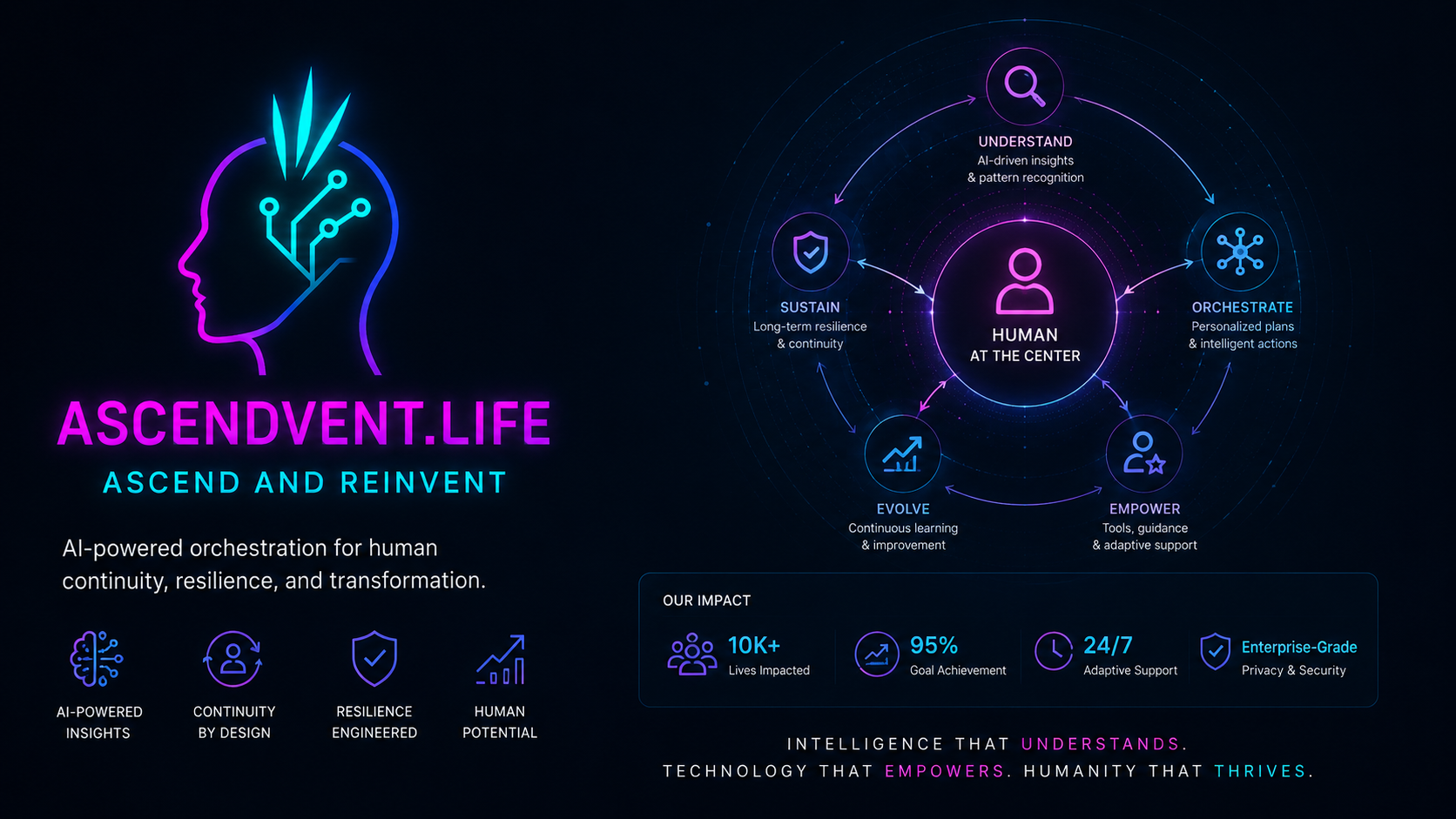
AOSI - Agent Orchestrated Self Improvement® framework. Reframed as a B2B methodology: AI handles the operational layer (scheduling, follow-up, progress tracking, accountability nudges) so the practitioner’s judgment and relationship stay front and center. This is the architecture that powers Checkin and the broader platform roadmap.
Checkin app. Live at checkin.ascendvent.life. It replaces the “how did this week go?” email thread with structured, lightweight check-in workflows that capture real signal and surface it back to the practitioner. Built full-stack with Claude Code: Next.js, Supabase, Stripe, Claude Sonnet 4.6 for AI drafts and pre-session briefs, Playwright end-to-end test suite. Priced at $15/month against $29/month competitors.
Outcomes
The B2C hypothesis didn’t survive contact with real customers. That’s the outcome. Validating a wrong hypothesis early is the most valuable thing a founder can do. It’s the difference between a pivot at month 6 and a shutdown at year 2.
The consulting practice is live and generating both revenue and product insight. Checkin is live and priced. The platform roadmap is grounded in real practitioner feedback rather than assumptions about what coaches need.
The coaching tools market isn’t short on features. It’s short on products that handle the ops layer so the human relationship can actually scale.
Current status: Consulting practice active. Checkin live at checkin.ascendvent.life — $15/month, production SaaS with active subscribers. Platform roadmap grounded in real practitioner workflows, not assumptions.